


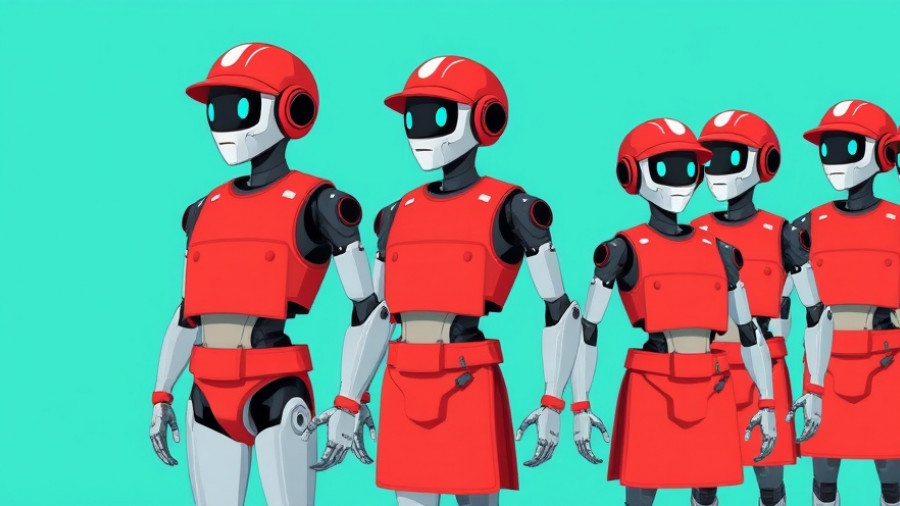
The Disappearance of Teen Jobs in the Era of Automation
The landscape of employment for teenagers in America has drastically changed over the last two decades. According to recent statistics, in 2000, over half of teenagers (52.3%) engaged actively in the workforce, while that number has dropped to a mere 34.8% in August 2025. This decline does not merely reflect a disinterest in work but rather a systemic shift driven by technological advancements that now prioritize efficiency over youth employment.
Automation has become a pervasive force across industries, replacing traditional entry-level jobs that were once filled by young workers. As noted by the Brookings Institution, the shift in labor dynamics sees profits transferred from workers to business owners, neglecting the critical role that these jobs play in youth development. The implications are profound: teenagers miss out on vital opportunities to develop skills, gain experience, and learn financial literacy.
Automation: A Double-Edged Sword for Teens
With advancements in machine learning and AI, even the simplest jobs, like stocking shelves or flipping burgers, are now being automated. For instance, grocery stores and fast-food chains are beginning to adopt robots to handle these tasks, thereby excluding the very teens who would benefit from their first jobs. This automation not only affects teenagers but also pushes adult workers into areas previously considered ideal for youth, further complicating the labor market.
Another alarming trend is the aging workforce in roles traditionally filled by younger individuals. The average age of a retail employee rose from 29.3 to 33 years in just a few years. As adults compete for jobs typically held by teenagers, automation is predicted to encroach further into delivery services too. Companies like Uber Eats and DoorDash are already exploring autonomous delivery options, further reducing employment opportunities for teens.
What This Means for Businesses and Future Workforce
Business owners and managers must acknowledge and adapt to these changes. Understanding emerging AI trends is critical, not just for creating efficiencies, but for nurturing the next generation of workers who are vital to sustaining industry growth. Ignoring the developmental impact of workplace experiences on teens can lead to a future workforce that is ill-equipped to navigate complexities in professional environments.
Furthermore, as teen employment diminishes, businesses may face a shortage of skilled workers down the line. Strategies must be developed to integrate young people back into the workforce, even as automation becomes more prevalent. Initiatives could include mentorship programs, partnerships with schools, and creating roles tailored for younger employees that complement automated processes.
Call to Action: Recognizing the Importance of Entry-Level Jobs
The challenge of automation does not merely lie in the technology itself but in the human impact of its implementation. As business leaders, it is imperative to advocate for systems that promote youth employment. Recognizing the value of entry-level jobs as an essential stepping stone toward career readiness ensures that the coming generations are prepared not only for the technical demands of the future but also for one of its most vital aspects — human connection.


Write A Comment