Add Row
Add Element
Add Element
cropper
update

AI GROWS YOUR BUSINESS

cropper
update
Add Element
  • AI update for local business on Facebook
    update
  • AI update for local business on X
    update
  • Dylbo digital media Google business profile
    update
  • Dylbo digital media on LinkedIn
    update
  • update
  • DYLBO digital media on YouTube
    update
  • DYLBO digital media on Instagram
    update
  • Home
  • Categories
    • AI Simplified
    • Tool Talk
    • Success Stories
    • Step-by-Step
    • Future Ready
    • Expert Opinions
    • Money Matters
November 04.2025
2 Minutes Read

Nintendo Raises Sales Expectations: What Business Leaders Can Learn from Switch 2 Success

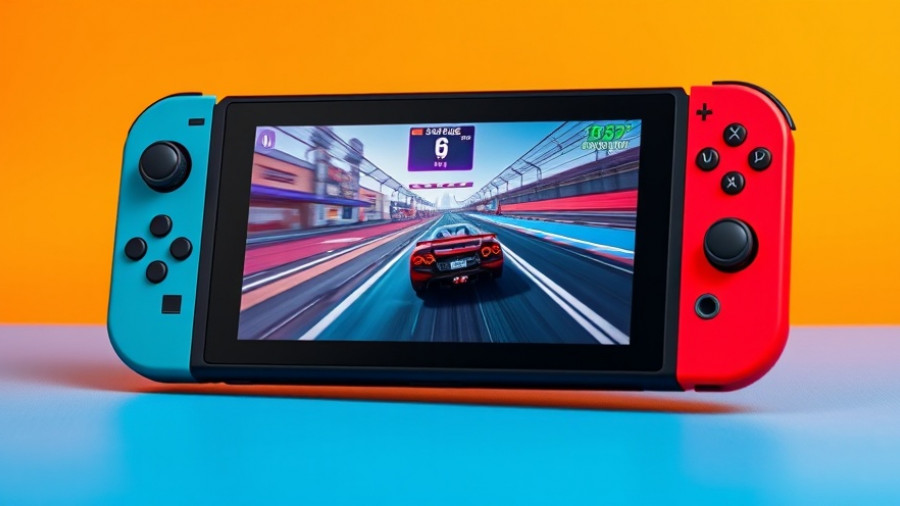
Nintendo Switch showing a game with vibrant background, sales forecast.

Nintendo's Bold Sales Predictions for the Switch 2

Nintendo has officially altered its forecasts for the Switch 2, expecting to sell a remarkable 19 million units by March 2026. This revision reflects a 25% increase from the previous estimate of 15 million units and is indicative of the console's swift popularity in the gaming market.

After surpassing ten million sales shortly after its launch in June, the Switch 2 broke records and outperformed Nintendo's initial expectations, prompting changes in their sales strategy. Reports from April to September show that 10.36 million systems were sold, with 4.54 million of these occurring in the latest earnings period.

The Impact of Rising Sales on Corporate Revenue

The increase in hardware sales has also resulted in a significant revenue boost for Nintendo, with total revenue surging to approximately ¥1,099.5 billion (around $7.1 billion) — a 110% increase from the same period last year. This boon doesn’t only stem from console sales; an impressive total of 20.62 million games for the Switch 2 were sold since launch. As expected, Nintendo has revised its total software sales forecast slightly from 45 million to 48 million.

Competitive Comparisons: Switch 2 vs. Historical Data

The Switch 2’s performance is remarkable, particularly when viewed against Nintendo's previous consoles, such as the Wii U, which sold only 13.7 million units in its entire lifespan. The Switch 2 has a strong likelihood of surpassing its predecessor's totals before it celebrates its first birthday, solidifying its place as a pivotal product in the gaming industry.

In addition to these forward-looking sales projections, the original Nintendo Switch continues to accumulate sales, recently reaching 154.01 million units sold. This puts it just short of the Nintendo DS, which holds the title of the company’s best-selling console. Nintendo is at a crucial turning point, with the Switch 2 poised to potentially dethrone the DS and challenge the Sony PlayStation 2 for the title of best-selling console in history.

What This Means for Business Leaders

For forward-thinking business owners and managers, Nintendo's strategic pivot in sales expectations offers crucial insights into consumer behavior and market dynamics. Understanding how a major player like Nintendo adapts to consumer demands and leverages data analytics to inform sales strategies can be invaluable for businesses in any sector.

As the gaming industry evolves, the implications of high-performing products across various markets could redefine business models and approach. Incorporating similar data-driven methodologies to identify growth opportunities and anticipate market trends may lend a competitive edge in any industry.

Future Ready

4 Views

0 Comments

Write A Comment

*
*
Related Posts All Posts
11.14.2025

What Nintendo’s Update on Switch 2 Docks Means for Future Gaming Trends

Update A Shift in Gaming Landscape: Understanding Nintendo's Decision The recent update to the Nintendo Switch 2 has ignited a firestorm of discussion among gaming enthusiasts and third-party accessory manufacturers. After the rollout of version 21.0.0, many were left puzzled as their third-party docks became either unreliable or completely unusable. This development raises important questions about compatibility, consumer rights, and the relationship between hardware developers and accessory manufacturers. Nintendo's Strategic Move: A Double-Edged Sword Nintendo has made headlines not only for the timing of the update but also for its ambiguous stance on third-party dock compatibility. The company's statement insists there was no intention to disrupt legal third-party devices. Yet, many in the gaming community remain skeptical. Could this update be a strategic maneuver to steer consumers toward Nintendo's proprietary accessories, which are often more expensive? As third-party docks continue to flounder, the concern is not solely about lost functionality but about a future where consumers may find themselves at the mercy of Nintendo's evolving technology. The Demand for Clarity: What Comes Next? One of the most pressing issues is the need for clarity on what constitutes a "legal" third-party dock in Nintendo's eyes. This somewhat bureaucratic language has left many users wondering about the reliability of the docks they have purchased. Is there a chance that other accessories could meet a similar fate? Historical precedents suggest we should brace ourselves for more changes; previous models of Nintendo's consoles also experienced compatibility issues with non-official peripherals. Thus, a cautious approach is essential when navigating the future of accessory compatibility. Implications for Businesses: Learning from the Gaming Industry For business owners and managers invested in technology, this scenario provides valuable insights into the importance of clear communication and compatibility in product development. The chaos in the gaming accessory market serves as a stark reminder that transparency is paramount in maintaining consumer trust. Future technology managers can glean from this situation that fortifying consumer relations and fostering open dialogue about product updates can enhance brand loyalty. Plan for the Future: Adapting to Changing Technology This incident reinforces a crucial concept in the tech world: adaptability. For companies manufacturing accessories, updating firmware post-release is not just a necessity; it’s a survival tactic. Businesses must stay ahead of trends, preemptively addressing potential compatibility issues before they escalate. This mindset can pave the way for innovation and resilience in an ever-evolving technology landscape. Your Role in Shaping Technology's Future As critical players in the business world, staying informed allows you to anticipate market changes and consumer behavior. Understanding the dynamics between companies like Nintendo and third-party manufacturers enables you to remain proactive rather than reactive. Take this opportunity to evaluate your industry and consider how you can carve out a niche that aligns with emerging technologies. Possessing foresight can position your business not just for survival but for success. Engage with industry peers, explore innovations, and partake in discussions surrounding the intersection of technology and consumer experience.

11.13.2025

Valve's Vision for Half-Life: Alyx as a Standalone Game on Steam Frame

Update Valve's Ambition for Half-Life: Alyx: A Game-Changing Standalone Experience When it comes to virtual reality gaming, few titles are as revered as Half-Life: Alyx. With Valve's latest hardware, the Steam Frame, the conversation around gaming's evolution is heating up. Valve is not just aiming to enhance the performance of Alyx for its new headset; it's looking to establish a robust standalone experience as well. This effort signals a potentially transformative shift in how virtual reality games may operate in the future. Technological Innovations Powering the Steam Frame The key to understanding Valve's objectives lies within the Steam Frame's impressive specs, notably its ARM-based architecture. This allows the headset not only to stream games but also to run them locally. Despite its capabilities, early reports indicate that achieving optimal performance for Alyx in standalone mode will require significant tuning. As noted in various tech analyses, the streaming component currently offers a reliable experience via foveated streaming, which minimizes latency and maximizes performance by adjusting resolution based on user gaze. Future-Proofing VR Gaming As Valve navigates these challenges, there’s a significant market implication. Business owners and industry leaders should take note: the ability to play games natively on hardware designed specifically for VR could redefine consumer expectations. Valve’s cautious optimism indicates they anticipate unlocking new productivity and immersion standards in VR gaming by leveraging local processing power. If successful, the prospect of natively running Half-Life: Alyx could establish a benchmark for other VR titles, encouraging developers to optimize their games for standalone experiences. The Broader Impact on Gaming Accessibility This push for a standalone version does more than just expand access for players; it could spark a broader trend toward enhancing accessibility within the VR space. Currently, players rely heavily on high-end PCs to engage with the most graphically demanding VR titles. A fully functional standalone version can lower the barriers for entry, making VR gaming more accessible to a wider audience. As Valve continues pursuing this goal, businesses invested in gaming and technology should anticipate a seismic shift in both hardware and gaming paradigms. Preparing for a Standalone Future With the expectations set high for the Steam Frame's performance, it’s critical for stakeholders in technology and gaming to remain observant. The developments at Valve could signal the beginning of a stand-alone VR evolution, ushering in new possibilities for how games are developed and experienced. This ongoing narrative is noteworthy not just for gamers but also for businesses looking to harness VR for training, marketing, and engagement. As innovation continues, it's essential for industry leaders to stay informed. The dynamic landscape of VR gaming is rapidly evolving, and understanding these trends can position you ahead of the curve in this emerging field.

11.12.2025

Valve's Steam Frame: Revolutionizing VR with Game Streaming Capability

Update The Rise of Valve's Steam Frame: A Game Changer in VR The gaming landscape is on the cusp of a significant evolution with the announcement of Valve's Steam Frame, a standalone VR headset that merges the capabilities of local gaming with seamless game streaming from PC. This new device represents a pivotal shift from Valve's previous tethered model, the Index, which required a physical connection to a gaming rig. With this latest offering, Valve is not just participating in the VR sphere; they are setting new benchmarks in user experience and gaming flexibility. Unpacking the Specifications: How Does Steam Frame Stand Out? Valve’s Steam Frame showcases impressive specifications that distinguish it among competitors like Meta Quest 3 and Apple Vision Pro. Weighing just 185 grams (or 440 grams with a head strap), the Frame offers a lightweight design significantly lighter than the bulk of its rivals, which can weigh up to 800 grams. It flaunts capabilities such as dual 2160 x 2160 per eye LCD screens offering crisp visuals and a refresh rate up to 144Hz, making it a prime choice for gamers looking to immerse themselves fully. Performance and Usability: Gaming Innovation at Its Core The Frame operates on a Snapdragon 8 Gen 3 chipset and runs SteamOS, allowing users access to a vast library of games. Unlike its predecessors, the Frame can run Windows x86 code and natively play many Steam games thanks to real-time code emulation. This flexibility is a game-changer, putting a plethora of titles at users' fingertips without requiring extensive developer adaptation. However, it's worth noting that high-performance gaming may still face challenges, with some real-time emulation issues expected to be ironed out leading into its early 2026 launch. Connecting the Dots: Industry Implications For industry stakeholders, the Steam Frame heralds crucial insights into consumer behavior towards gaming technologies that prioritize flexibility and connectivity. As remote work and digital engagement grow, tools that enable efficient gaming and productivity across platforms are increasingly in demand. Additionally, the ability to natively run games signifies a shift towards self-sufficient gaming devices, likely impacting game development trends and hardware design across the industry. The anticipated pricing of the Steam Frame is yet to be established, but it promises to be more affordable than its predecessors, potentially expanding accessibility in the gaming market. Framing the Future: What Lies Ahead for VR Technologies The capabilities of the Steam Frame could provide a blueprint for future gaming headsets, potentially delivering integrated features like cloud processing and enhanced multi-device synchronization. As advancements in technology continue, businesses and developers alike will need to adapt to accommodate an ecosystem where gaming devices are no longer just apparatuses but essential components of a modern digital lifestyle. In conclusion, Valve's Steam Frame may very well set the stage for the next era of virtual reality, leading to richer, more connected gaming experiences. The upcoming features and capabilities of the Steam Frame signal that the industry is moving toward a future where flexibility and high-performance gaming are more integrated than ever before. As business owners and industry leaders keen on technological advancements, staying attuned to these shifts will be critical for maintaining a competitive edge. Explore how emerging technologies like the Steam Frame can potentially transform your industry and prepare for the wave of innovation ahead.

Terms of Service

Privacy Policy

Core Modal Title

Sorry, no results found

You Might Find These Articles Interesting

T
Please Check Your Email
We Will Be Following Up Shortly
*
*
*