Add Row
Add Element
Add Element
cropper
update

AI GROWS YOUR BUSINESS

cropper
update
Add Element
  • AI update for local business on Facebook
    update
  • AI update for local business on X
    update
  • Dylbo digital media Google business profile
    update
  • Dylbo digital media on LinkedIn
    update
  • update
  • DYLBO digital media on YouTube
    update
  • DYLBO digital media on Instagram
    update
  • Home
  • Categories
    • AI Simplified
    • Tool Talk
    • Success Stories
    • Step-by-Step
    • Future Ready
    • Expert Opinions
    • Money Matters
August 22.2025
2 Minutes Read

Stellantis Unveils New Jeep Cherokee: A Hybrid That Aims to Reverse Sales Decline

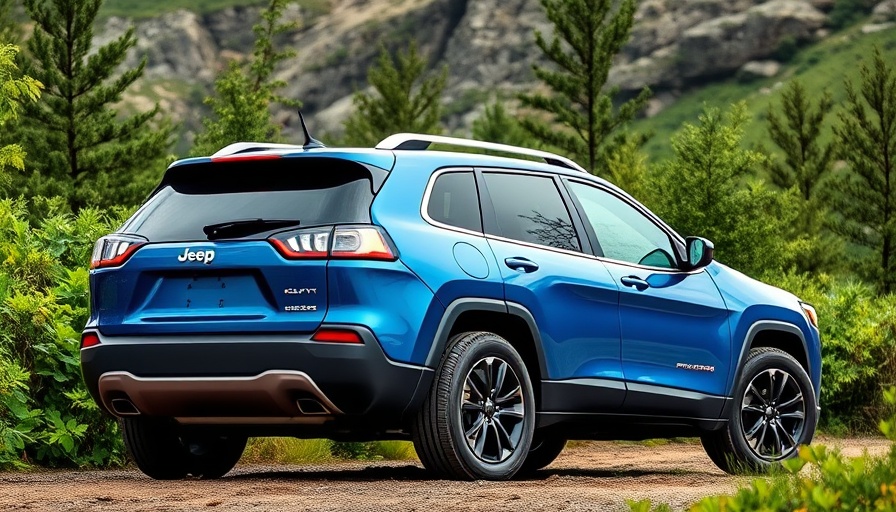
2026 Jeep Cherokee hybrid in outdoor setting with greenery.

Stellantis Bets Big on New Jeep Cherokee to Revive Sales

In recent years, the automotive industry has seen a flurry of changes, but none more crucial than car brands adapting to market demands. Stellantis, the parent company of Jeep, has just unveiled the redesigned 2026 Jeep Cherokee, a move aimed specifically at revitalizing sales in a market that has been tough on them.

A History of Challenges for Jeep

The Jeep Cherokee, once a staple of the American roads, faced a decline in popularity that led to its discontinuation in 2023. This was part of a broader strategy during the leadership of former CEO Carlos Tavares. Jeep’s sales slump was a growing concern; they faced six consecutive years of declines before the announcement of this new model.

Step Toward Sustainability

What makes this new release particularly exciting is its hybrid powertrain. For the first time, Jeep is stepping into hybrid territory with a 1.6-liter turbo-four engine that promises over 500 miles on a single tank. This not only aligns with consumer demand for more eco-friendly options but also positions Stellantis competitively in the increasingly green automotive market.

Features That Speak to the Future

Jeep is also focusing on customer convenience with the introduction of the "Connect One" services package, ensuring that communication and technology are at the forefront. Additionally, this revamped model boasts an impressive 30% increase in cargo capacity, catering to families and outdoor enthusiasts alike.

What Lies Ahead for Jeep?

As the automotive landscape evolves, companies like Stellantis are focusing on not just the technological aspects but also the emotional connection consumers have with their vehicles. Bob Broderdorf, Jeep’s CEO, emphasized that the 2026 Cherokee is about reclaiming territory in North America's largest vehicle segment.

The starting price of $36,995 for the entry-level model makes it accessible for many potential buyers, which could be a critical factor in rebuilding brand loyalty and invigorating the market.

As Jeep prepares to launch this new SUV, it will be interesting to observe how the Cherokee's relaunch could not only impact sales but also set the tone for the brand's future direction.

Moving Forward in the Automotive Space

For business leaders, understanding these shifts in the automotive market is crucial. The launch of this new Jeep Cherokee isn’t just about a vehicle; it’s about how companies can adapt and thrive in changing times. The automotive sector increasingly mirrors many other industries where innovation, customer need, and sustainability are keys to enduring success.

Expert Opinions

19 Views

0 Comments

Write A Comment

*
*
Related Posts All Posts
01.06.2026

Nvidia's Rubin Chip Revolutionizes AI with Unmatched Performance

Update Nvidia's Rubin Chip Sets New Standards in AI Computing Nvidia Corp. has unveiled its highly anticipated Rubin chip at CES 2026, a significant leap in AI computing technology. With an astonishing count of 336 billion transistors, the Rubin chip delivers a staggering 50 petaflops of AI processing performance, revolutionizing both inference and training capabilities in data centers. This performance is touted to be five times greater than its predecessor, the Blackwell architecture, which previously maxed out at 10 petaflops. Unleashing AI's Full Potential with Advanced Chip Architecture The Rubin chip incorporates a state-of-the-art Transformer Engine designed to efficiently enhance processing via hardware-accelerated adaptive compression. This feature reduces data load for AI models, leading to quicker processing times. Nvidia’s CEO, Jensen Huang, emphasized the critical timing of Rubin’s release, highlighting the surge in demand for AI training and inference capabilities across various industries. The Vera Rubin NVL72: A New Era of AI Supercomputing Alongside the Rubin chip, Nvidia introduced the Vera Rubin NVL72, an appliance that integrates 72 Rubin chips with advanced Vera CPUs featuring 88 cores. This setup not only maximizes processing power but also boosts operational efficiency. The NVL72 is designed with modular trays and an impressive bandwidth capacity of 260 terabits per second—surpassing the entire internet's capacity—making it an ideal solution for handling multifaceted AI modeling tasks. The Competitive Edge: Nvidia Outsprints Rivals in AI Hardware Nvidia's rapid production timeline for its Rubin architecture has caught industry competitors off guard, with chips entering full production ahead of schedule. The company's rigorous development strategy has enabled it to maintain an annual cadence of major hardware advancements, ensuring its position as a leader in the AI infrastructure market. Major cloud service providers, including AWS, Google Cloud, and Microsoft, are eagerly awaiting deployments of the Rubin chips throughout 2026. Strategic Implications for Business Leaders and Tech Innovators For business leaders and technology professionals, understanding the advancements encapsulated within the Rubin chip is crucial for making informed decisions regarding AI deployment. The significant performance enhancements not only promise improvements in operational efficiencies but also offer competitive advantages in data-centric sectors. Embracing such cutting-edge technology could redefine industry standards and expectations surrounding AI capabilities. As the AI landscape evolves, ensuring your organization adapts to these technological advancements will be key to staying competitive in an increasingly data-driven economy.

01.06.2026

Sedgwick Cyberattack: Insights on TridentLocker’s Threat to Federal Contracts

Update Understanding the Recent Sedgwick Cyberattack In a troubling turn of events, Sedgwick Claims Management Services Inc. has confirmed a cyberattack that compromised one of its subsidiaries, Sedgwick Government Solutions. The attack, which occurred on December 30, 2025, was claimed by the TridentLocker ransomware group, who asserted that they stole approximately 3.4 gigabytes of sensitive data. The subsidiary, which provides essential services to U.S. federal agencies, including the Department of Homeland Security and the Cybersecurity and Infrastructure Security Agency, has sparked significant concern given its sensitive role in managing claims and risk. The Immediate Response: What Was Done? In response to the cyber incident, Sedgwick implemented standard forensic protocols, including system isolation and engagement with cybersecurity experts. Importantly, the company emphasized that the breach appeared to be limited to a specific file transfer system, raising questions about the potential implications of the stolen data on operations related to national security sectors. The isolated nature of the attack within a segment of their broader network has led to a cautious optimism about avoiding extensive damage. Broader Implications of Cyberattacks on Government Contractors Michael Bell, CEO of Suzu Labs, noted the significance of the attack on a federal contractor such as Sedgwick, pointing out that contractors often have less mature cybersecurity programs compared to the federal agencies themselves. This makes them prime targets for advanced threats like TridentLocker, a group that has rapidly gained notoriety since its emergence just weeks prior to the attack. A focus on securing contractors interfacing with federal data is increasingly urgent as these breaches can lead to serious national security risks. The Rise of TridentLocker and the Future of Cybersecurity The emergence of TridentLocker in late November 2025 marks a worrying trend in the cybersecurity landscape, showcasing a shift towards data extortion models rather than traditional ransomware tactics. This trend necessitates enhanced vigilance and proactive measures by organizations similar to Sedgwick. Experts advocate for improved security assessment techniques and heightened training for personnel on recognizing cyber threats. As these criminal organizations become more sophisticated, businesses need to adopt a forward-thinking approach to deal with potential breaches actively. Concluding Thoughts and the Call to Action This incident serves as a reminder of the rapid evolution in the cybercrime landscape and the imperative for companies to frequently evaluate their cybersecurity frameworks. Business leaders must prioritize robust risk management strategies to safeguard sensitive data against escalating cyber threats. As we digest the implications of the Sedgwick incident, it's crucial to engage with cybersecurity experts and implement advanced practices to enhance operational security. Start taking steps today to assess and fortify your organization’s cybersecurity posture.

01.06.2026

Lucid's EV Deliveries Surge 55% in 2025: Key Takeaways for Business Leaders

Update Lucid Shows Resilience with Dramatic Increase in EV DeliveriesAs electric vehicle (EV) manufacturers grapple with industry-wide challenges, Lucid Group has emerged as a beacon of resilience, reporting a remarkable 55% increase in deliveries year-over-year. This surge comes as the company ramps up production of its new Gravity SUV and adapts to evolving market conditions. With total deliveries reaching 15,841 units in 2025, including an impressive 70% increase in the fourth quarter, Lucid’s growth stands out despite the broader slowdown in the EV sector. Challenges and Triumphs in the EV MarketDespite Lucid's strong performance, the EV industry faces numerous hurdles, including rising production costs and regulatory changes that threaten profitability. Tighter government policies around federal incentives have further complicated sales forecasts, leading to concerns about future growth. Designed to drive consumer demand, the now-expired EV tax credits had previously boosted market enthusiasm, leaving companies like Lucid to navigate a more challenging landscape.Strategic Adjustments Yield ResultsMeeting lowered production targets is a feat that many companies struggle to achieve. Lucid managed to produce 18,378 units in total, aligning closely with its revised target of roughly 18,000 vehicles for the year. Moving forward, strategic adjustments to production processes, particularly concerning the Gravity SUV, are integral for Lucid's growth trajectory. As they continue to address supply chain constraints, the company is optimistic about increasing production rates.What This Means for the FutureThe electric vehicle landscape is rapidly evolving, and Lucid's ability to adapt and increase production while maintaining quality is a testament to its strategic direction. While Lucid only marketed around half that of competitors last year, this growth could set the stage for larger market share as production bottlenecks ease and new models are introduced. The outlook remains cautiously optimistic as Lucid prepares for its next earnings call, where discussions around production goals and upcoming models, including a compact offering aimed at competing directly with Tesla, will be paramount.

Image Gallery Grid

Terms of Service

Privacy Policy

Core Modal Title

Sorry, no results found

You Might Find These Articles Interesting

T
Please Check Your Email
We Will Be Following Up Shortly
*
*
*